
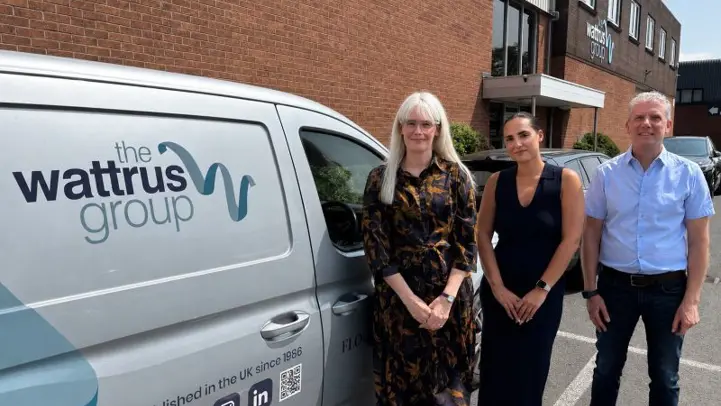
The Wattrus Group, a long-established SME based in Solihull, has taken significant steps towards improving their operational sustainability with the support of Business Energy Advice Service (BEAS). Through targeted funding and expert guidance, the company has reduced its carbon footprint, improved workplace conditions and gained valuable insights that will help them drive long-term energy efficiency.
Founded in 1986, The Wattrus Group specialises in soft furnishings, window treatments, flooring and window blinds. Serving interior designers, architects and developers throughout the UK, the company offers interior fit-out and finish, flooring installations curtain and blind manufacturing, along with building facilities maintenance and refurbishment. With a team of 58 locally recruited employees, The Wattrus Group is committed to improving its environmental performance while maintaining a high-quality service.
Through the BEAS programme, The Wattrus Group received funding to improve the sustainability of its operations. Primarily, the grant enabled them to invest in an electric forklift to replace their previous gas forklift to decrease their usage of fossil fuels, as well as minimising noise pollution for staff.
The Group were also able to purchase a sewing machine with pinch pleating system to increase their productivity and operational efficiency, and a twin baler to package leftover plastic and cardboard for their local recycling centre to reduce waste.
Beyond the funding, Business Growth West Midlands (BGWM) provided additional guidance to help the business accurately measure and reduce the carbon impact of key production machinery, along with an energy assessment and sustainability review which provided an in-depth analysis of the Group’s energy usage, machinery efficiency and operational practices.
Charlie Mitchell, Operations Manager at The Wattrus Group, said:
“We became aware of the BEAS having completed an energy assessment through Birmingham City Council. As a family-run SME, the Group have strong aims to become as sustainable as possible by reducing our use of fossil fuels, being more conscious of our environmental impact, reducing waste and increasing the recyclability of our materials.
“The impact of this programme has been significant for us; it’s helped us to greatly reduce our waste with the twin bailer and by switching from a gas forklift to an electric forklift, we’ve made a measurable impact on reducing our carbon emissions.
“To any other business leaders across the West Midlands who are considering engaging with the BEAS, we’d highly recommend it. They’re very supportive, and they’ve helped us every step of the way. It can be daunting putting in a grant application, but they guided us through the whole thing and was very much worthwhile.”
Cllr Heather Delaney Deputy Leader and Cabinet Portfolio Holder for Economy, Business & Skills at Solihull MBC, said:
“The Wattrus Group’s journey demonstrates how local businesses can leverage BEAS funding and expert advice to make meaningful sustainability improvements.
“The Net Zero Grant Diagnostic & Sustainability Review gave them an in-depth analysis of their energy usage, machinery efficiency and operational practices, resulting in actional recommendations that enabled the Group to progress towards becoming Net Zero.
“The BEAS grant has delivered measurable benefits for The Wattrus Group, including a significant reduction in operational carbon emissions, and enhanced employee wellbeing thanks to improved indoor air quality and quieter working conditions.
“The wider impact of this programme has meant The Wattrus Group have also strengthened their reputation as a forward-thinking, environmentally responsible local business; they have set a benchmark for SMEs looking to balance growth with environmental responsibility.”
Find out more
The Business Energy Advice Service (BEAS) is a programme provided by Business Growth West Midlands, which offers free on-site energy assessments and expert advice to help West Midlands-based SMEs to reduce energy use, cut costs and support growth.
These assessments include tailored reports with practical recommendations, and may include grant funding for energy efficiency projects where available. To be eligible, businesses must be SMEs with fewer than 250 employees, have annual energy consumption of at least 25,000 kWh, have operated from a commercial address for at least months, be responsible for energy bills and be commercial entities.
See the full grant criteria and find out if your business is eligible.
Article originally published here